You finally order a beautiful seating sofa for your new place. But delivery day arrives and the nightmare quickly begins.
The bulky frame completely blocks your hallway, shrinks your floor plan, and leaves zero room for a coffee table. You just wasted your hard earned money on a piece that makes your daily life much harder.
You can fix this by finding a small apartment couch designed for tight layouts. By tapping into smart compact furniture trends 2026, you get comfort without losing floor space.
3 Ways to Measure Your Space and Avoid the Doorway Trap

The biggest mistake you can make is forgetting to measure your hallways and doorway frames before ordering. The dreaded doorway pivot disaster happens when your delivery team cannot squeeze the sofa inside.
Sadly, over 70 percent of furniture returns happen due to poor initial room measurements.
You must follow a strict process to map your space accurately before buying anything. Grabbing a measuring tape early will save you massive headaches on delivery day.
- Measure the exact height and width of your main doorway.
- Map out the new footprint on your floor using painter tape.
- Verify you have left the required space for foot traffic.
Are you leaving exactly 18 inches of clearance around your coffee table for comfortable walking? This specific gap ensures you can move freely without bumping your shins on hard edges.
A standard width of 70 to 84 inches is the absolute sweet spot for tight apartment layouts.
Anything larger will instantly overwhelm the room and block natural light from your windows.
A giant piece of furniture visually shrinks your available square footage. Always check the exact leg height so your robot vacuum can easily slide underneath.
3 Smart Multifunctional Features for Urban Living

Rapid global urbanization is changing how we decorate our homes right now. Recent market data from Mordor Intelligence shows a massive 5.4 percent growth in functional interior design.
This means you need furnishings that do double duty to maximize your limited square footage.
Look for a modern space saving sofa that hides generous integrated storage compartments under the seat cushions.
You can easily tuck away extra blankets or winter clothing to keep your room organized. What happens when guests want to stay over after a long night out?
The answer lies in modern sleeper conversions that unfold smoothly into comfortable guest beds. These newer models use plush memory foam mattresses instead of those painful metal bars from the past.
Modular pieces are also incredibly popular because they adapt to different room shapes instantly.
You can break a modular frame apart to create separate seating zones when hosting friends for dinner. These adaptable pieces give you total control over your floor plan as your needs change.
Your next step is finding a resilient material that can handle this heavy daily use.
Why Does Fabric Choice Matter for Heavy Daily Use?

Material durability matters immensely when your sofa doubles as a dining chair and a home office desk. You need a tough fabric that resists coffee spills and sharp pet claws.
Industry reports show that 70 percent of buyers now prioritize both comfort and durability over pure aesthetics.
Performance fabrics like microfiber and tightly woven chenille are your best options for resisting stubborn stains. These structured materials wipe clean easily while remaining wonderfully breathable and soft against your skin.
Even an innovative HSM Compressed sofa needs a durable exterior to protect its advanced foam core.
You must evaluate your fabric choices based on your specific daily habits and routines. Here is a quick checklist of the best fabric criteria for small spaces.
- Resists liquid spills and dries quickly.
- Handles heavy daily friction without pilling.
- Offers a plush texture for maximum coziness.
You should always request fabric swatches before making your final purchasing decision. Place these swatches in natural sunlight to see how the texture looks during different times of the day.
A beautiful frame means nothing if the upholstery falls apart after just a few months of use.
The sofa-buying path that prevents tight-layout regret
A beautiful couch can still become a daily problem if it blocks the hallway, eats the floor plan, or leaves no room for a coffee table. Use this compact-space checklist before you order.
-
1
Measure every entry point
Start with the exact height and width of your main doorway before looking at sofa styles.
Tap for detailDo not stop at the living room wall. Check hallways, doorway frames, and the path the delivery team has to turn through. -
2
Tape the footprint on the floor
Use painter tape to map the sofa’s real footprint before the couch arrives.
Tap for detailThis shows whether the frame blocks windows, shrinks the walking path, or steals the coffee table zone. -
3
Protect walking clearance
Leave 18 inches around the coffee table so daily movement still feels comfortable.
Tap for detailThe article’s tight-layout sweet spot is a sofa width of 70 to 84 inches, with enough space for foot traffic. -
4
Choose double-duty features
Small apartments need sofas that work harder than basic seating.
Tap for detailLook for hidden storage, smooth sleeper conversions, or modular pieces you can separate into different seating zones. -
5
Pick fabric for real daily use
The sofa may double as a dining chair, guest bed, and work-from-home seat.
Tap for detailMicrofiber and tightly woven chenille resist stains, handle friction, and still feel soft. Request swatches before deciding. -
6
Test the layout before buying
Real layouts work when the sofa supports the room instead of overpowering it.
Tap for detailCopy the article’s examples: divide a studio, use a low profile sofa, rearrange modular pieces, or test the fit with an augmented reality app.
4 Real World Layout Success Stories to Copy Right Now
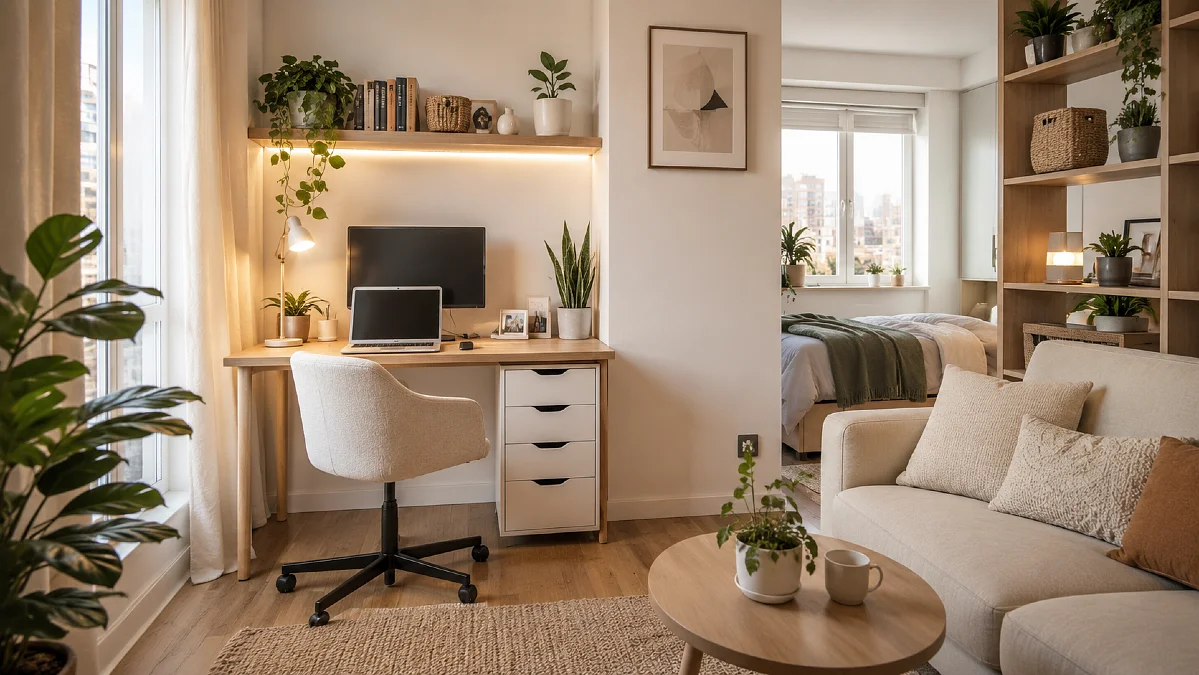
Seeing real examples helps connect abstract design rules to practical execution. Marija optimized her tiny studio apartment by placing her sofa directly against the foot of her bed.
This clever placement created a clear visual divide between her sleeping area and her entertainment zone.
Amanda wanted to anchor her living room using a stunning 72 inch velvet sofa in a deep emerald green. She chose a low profile Japandi aesthetic to create the optical illusion of much higher ceilings.
The lower height allows natural sunlight to flood the entire room without any bulky visual obstruction.
Linda Marry struggled with an awkwardly shaped corner until she invested in a flexible modular sectional. She constantly rearranges the individual pieces to accommodate large groups during her weekend movie nights.
This adaptability proves that a small footprint does not mean you have to sacrifice social gatherings.
Sara needed a way to define her completely open layout while preparing for frequent visitors. She opted for a sleek sleeper sofa with hidden storage to hold extra guest pillows and duvets.
She used a popular augmented reality app on her phone to test the exact fit before buying.
You can easily replicate these smart strategies to make your cramped room feel like a breathable sanctuary. Start by mapping out your floor plan with painter tape today. Your perfect layout is completely within reach if you plan carefully.
| Check Before Buying | Why It Matters So Much | The Ideal Target |
| Total Sofa Width | Keeps the room feeling open. | 70 to 84 inches |
| Coffee Table Gap | Prevents you from bumping your shins. | 18 inches |
| Bottom Leg Height | Allows your robot vacuum to fit underneath. | 4 to 6 inches |
| Fabric Material | Resists stubborn stains and daily wear. | Microfiber or Chenille |
| Bonus Feature | Saves valuable floor space in tight rooms. | Hidden storage |
The 5 Minute Solution to Buying Your Perfect Sofa

Finding the perfect seating solution requires careful planning and a strict focus on exact dimensions.
You must measure rigorously to ensure proper clearance and prioritize durable fabrics like microfiber.
Seeking out dual purpose functionality will ultimately save you valuable square footage in the long run.